-1.png?width=350&height=187&name=ring%20results%20(1)-1.png)

3 min read
How to Improve Leadership Skills in Real Time (Not Just in Training)
Most leadership development happens outside of the daily work. In workshops, offsites, assessments.
Leaders step away,...
By: Diane Ring on April 15, 2026
Most leadership challenges don’t come from a lack of knowledge.
They come from moments.
Especially moments where a leader knows what they should do… but just can’t seem to do it.
Not because they don’t care.
Because something else takes over.
These moments are often subtle.
They happen quickly and then they pass.
But they show up in ways like:
Softening feedback that needs to be direct
Avoiding a conversation that’s been building for weeks
Over-explaining instead of making a clear decision
Reacting defensively in a tense exchange
Stepping in to fix instead of letting others own it
From the outside, it can look like hesitation… or style. But something more specific is happening.
In these moments, leaders aren’t choosing their response.
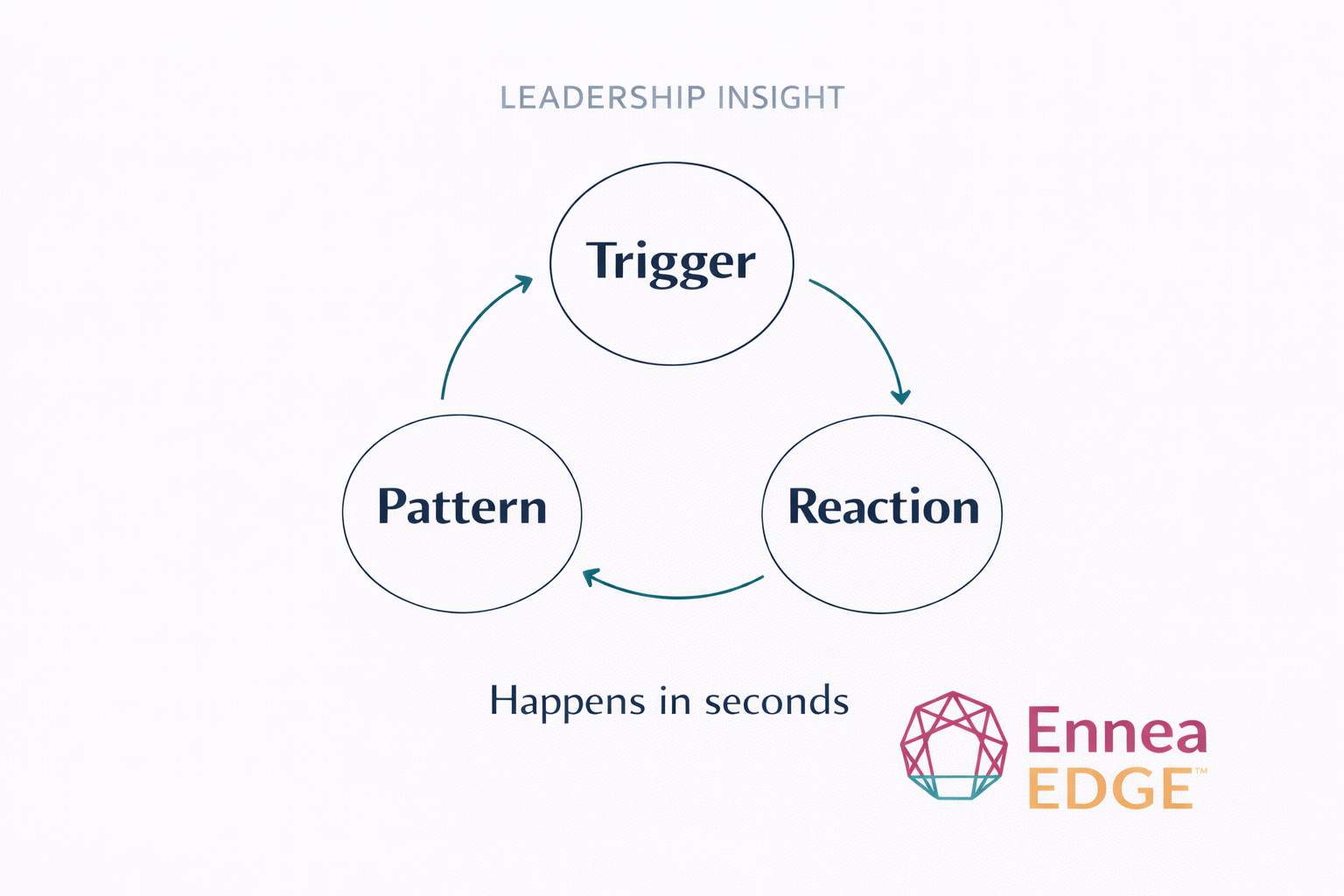
They’re running a pattern.
A learned way of operating that feels automatic:
to reduce tension
to stay in control
to avoid risk
This is where tools like the Enneagram are useful. They help leaders understand:
what their default patterns are
what triggers those patterns
But understanding the pattern isn’t enough.
Here’s the part that matters:
There is a very small window—often just a few seconds—between trigger → reaction.
Most leaders don’t experience that window.
It happens too fast.
So even if they know:
“I tend to avoid conflict”
or
“I get too forceful under pressure”
They still default to that behavior. Not because they’ve forgotten. Because they can’t access the awareness in time.
Let’s make this concrete.
A leader goes into a conversation knowing they need to be direct.
In the moment:
they soften the message
they circle the issue
they leave the conversation unclear
Afterward, they think:
“That’s not what I meant to say.”
A leader needs to make a call quickly.
Instead:
they over-explain
they seek more input than necessary
What looks like collaboration is actually avoidance.
A comment lands wrong.
In the moment:
they interrupt
they defend
they go quiet
Later, they can see it clearly. But in the moment, it felt automatic.
These aren’t isolated moments. They compound.
Over time, they shape:
how a team experiences a leader
how decisions get made
how trust is built—or eroded
And most leaders are aware enough to know something is off. They just don’t have a way to shift it in real time.
The goal isn’t to eliminate patterns. It’s to notice them early enough to choose differently.
That requires:
creating a brief pause between trigger and response
having a way to think through situations before and after they happen
This is where development needs to evolve. Not more content. Not more frameworks.
But support that helps leaders:
catch the moment
Leadership doesn’t break down because leaders don’t know what to do.
It breaks down in the moment they can’t access what they know.
That’s the work.
Learning to recognize those moments—and creating just enough space to choose a different response.
That’s where leadership actually changes.
And that’s the focus of the work I’m doing with EnneaEDGE.
You can learn more about the Enneagram here.
#Leadership
#DifficultConversations
#LeadershipSkills
#EmotionalIntelligence
#EnneaEdge
Apr 15, 2026by Diane Ring
Most leadership development happens outside of the daily work. In workshops, offsites, assessments.
Leaders step away,...
Apr 15, 2026by Diane Ring
Most leadership challenges don’t come from a lack of knowledge.They come from moments.Especially moments where a leader...
Apr 15, 2026by Diane Ring
Many leaders want to improve their leadership skills—but find that self awareness alone isn’t enough to change behavior.